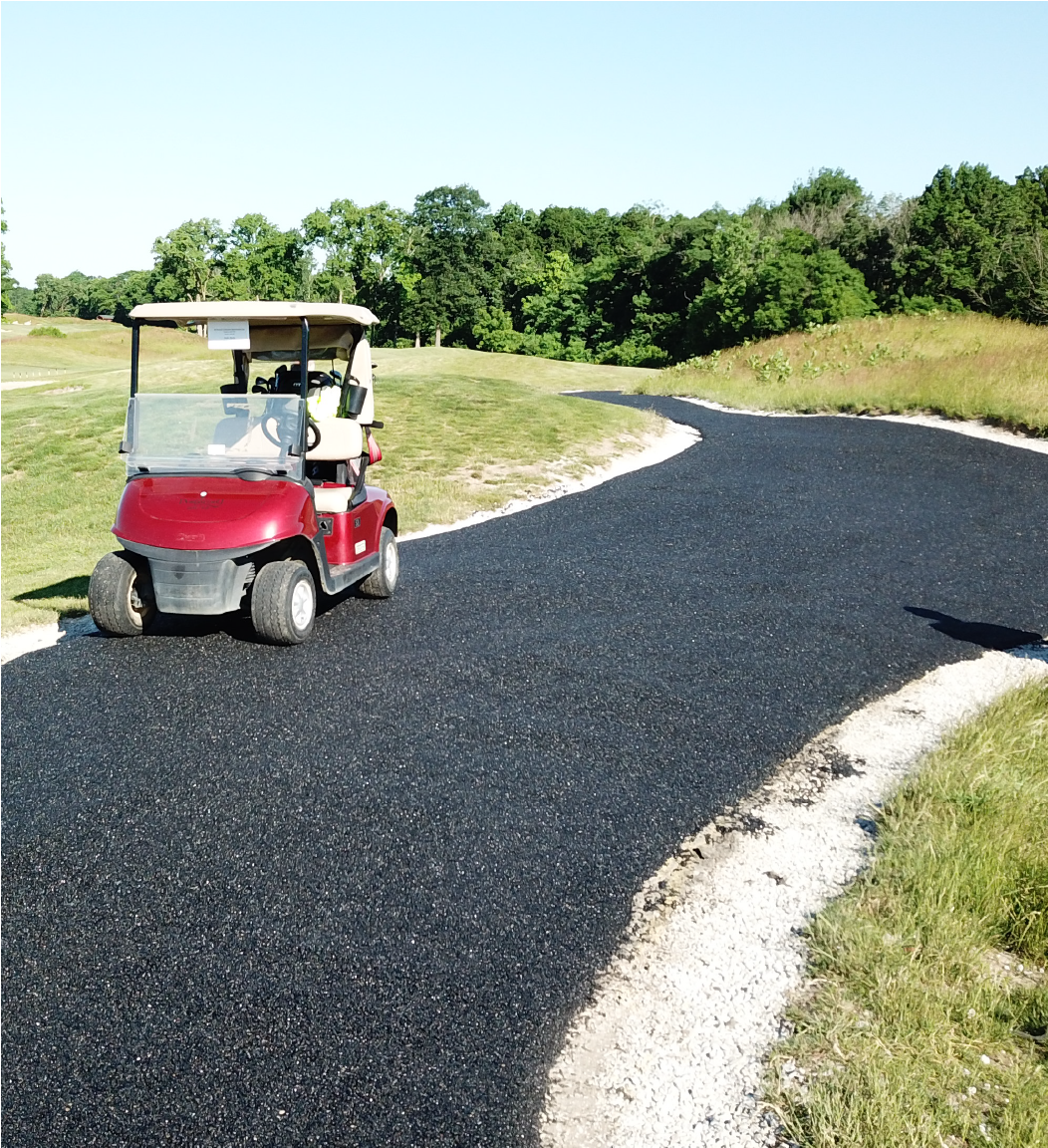
Porous Pave for Golf Courses

Engineered Stability for Playability, Drainage, and Long-Term Performance

Golf courses operate in constant partnership with the environment. Rain, irrigation, and daily play all put stress on surfaces, leading to erosion, washouts, rutting, and ongoing maintenance demands.

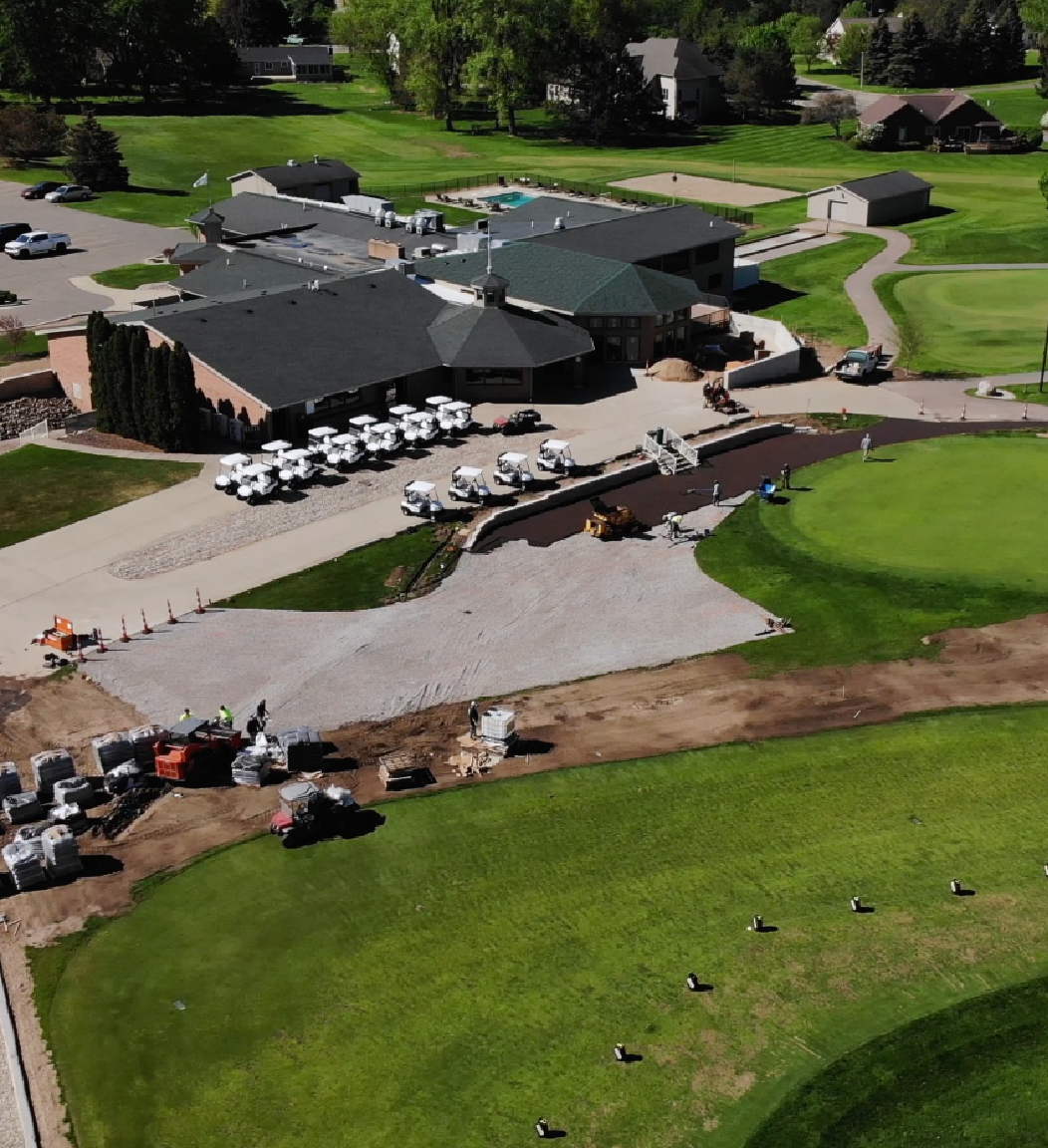
Porous Pave is a permeable, stabilized surface system designed to protect high-impact areas while supporting drainage and consistent playing conditions. From cart paths to bunker liners, our system integrates seamlessly into the landscape, reinforcing vulnerable areas without disrupting the natural aesthetic of the course.

Superintendents and course managers rely on Porous Pave to reduce maintenance, improve durability, and maintain the integrity of their course design.

Designed for Golf Applications

Porous Pave systems are trusted across a wide range of golf course environments, including:

  • Bunker liners and bunker stabilization
  • Cart path edges and transitions
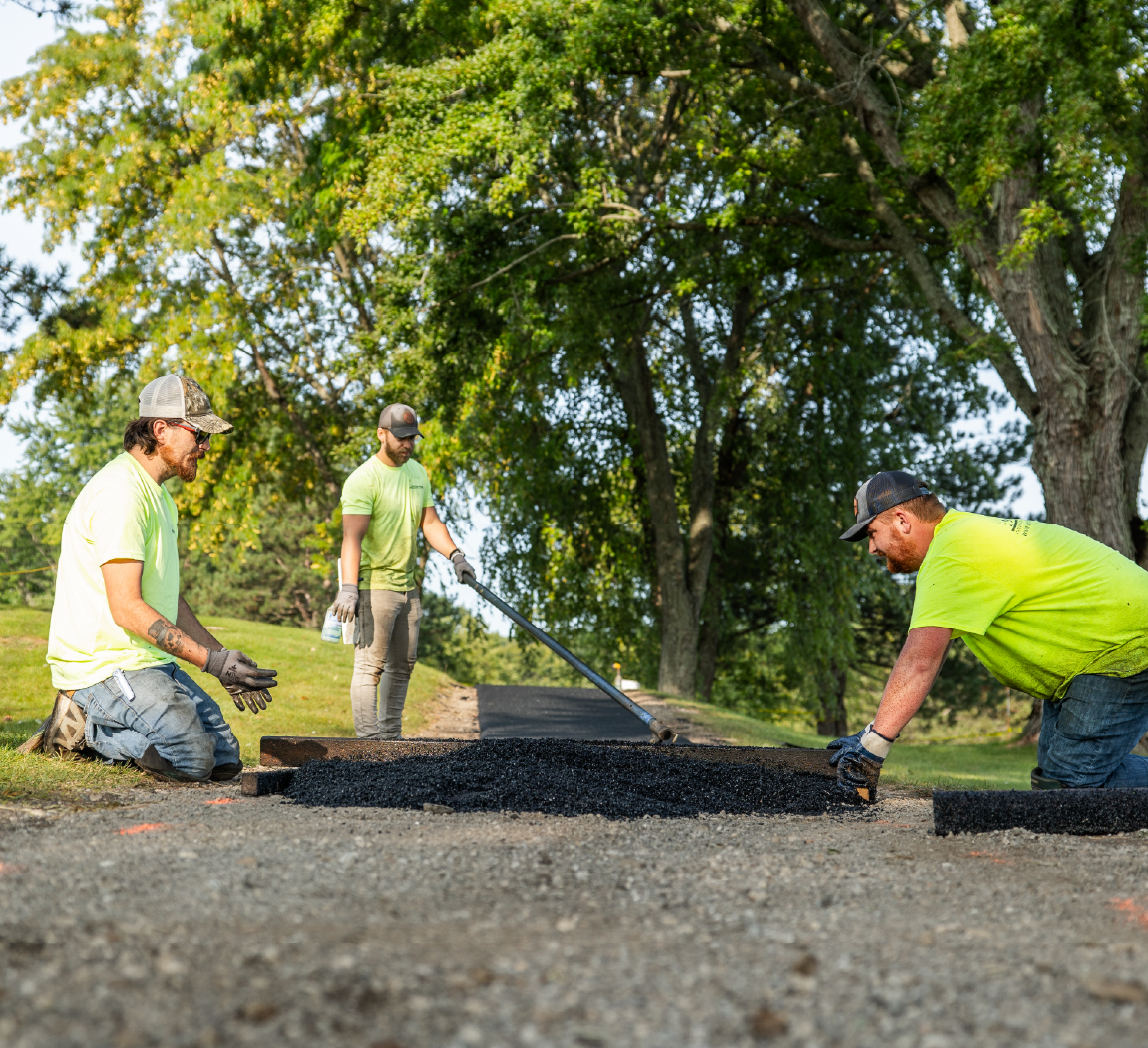
  • Full cart path stabilization systems
  • Turf reinforcement in high-traffic areas
  • Maintenance access strips
  • Drainage channels and low-lying areas
  • Tee box surrounds
  • Walking paths and naturalized rough transitions

These applications help maintain consistent playing conditions while reducing the impact of weather and traffic.

Cart Paths & High-Traffic Areas

Cart paths and high-traffic zones are some of the most heavily used, and most vulnerable, areas on any golf course. Traditional materials often lead to rutting, edge breakdown, standing water, and costly ongoing repairs. Porous Pave provides a flexible, permeable solution that stabilizes these areas while allowing water to pass through the surface. This eliminates pooling and reduces erosion, even in challenging conditions.

Why It Works:
• Superior drainage
prevents standing water and soft spots
• Flexible structure
resists cracking and rutting
• Reduced maintenance
compared to asphalt or concrete
• Natural appearance
that blends into the course design

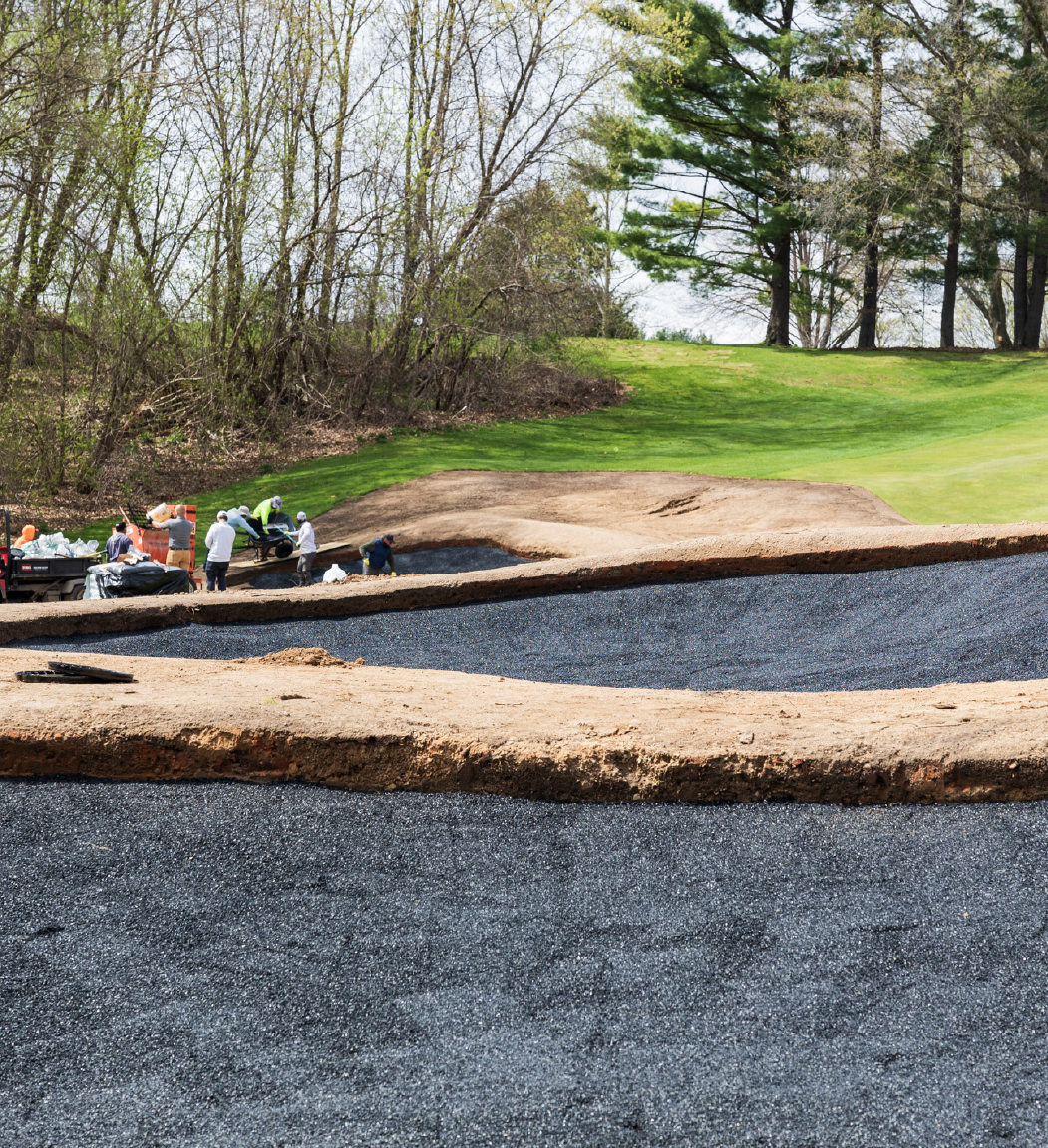
Sand Guard Bunker Liner Systems

Today, bunker liner materials are comprised of different materials, depending upon the manufacturer. Various construction materials are available on the market for bunker liner, including pour-in-place permeable rubber liner, porous asphalt, porous concrete, erosion control fabric/cloth, non-woven matting, field turf, sod, polymer-based liquid (spray on material applied to gravel or the subfloor), rubberized mats and batch mixed.

Reasons to use:
No waiting for materials to show up
Easy and fast installation
Flexible AND durable
Eliminates washouts
Reduces maintenance

Frequently Asked Questions

View All
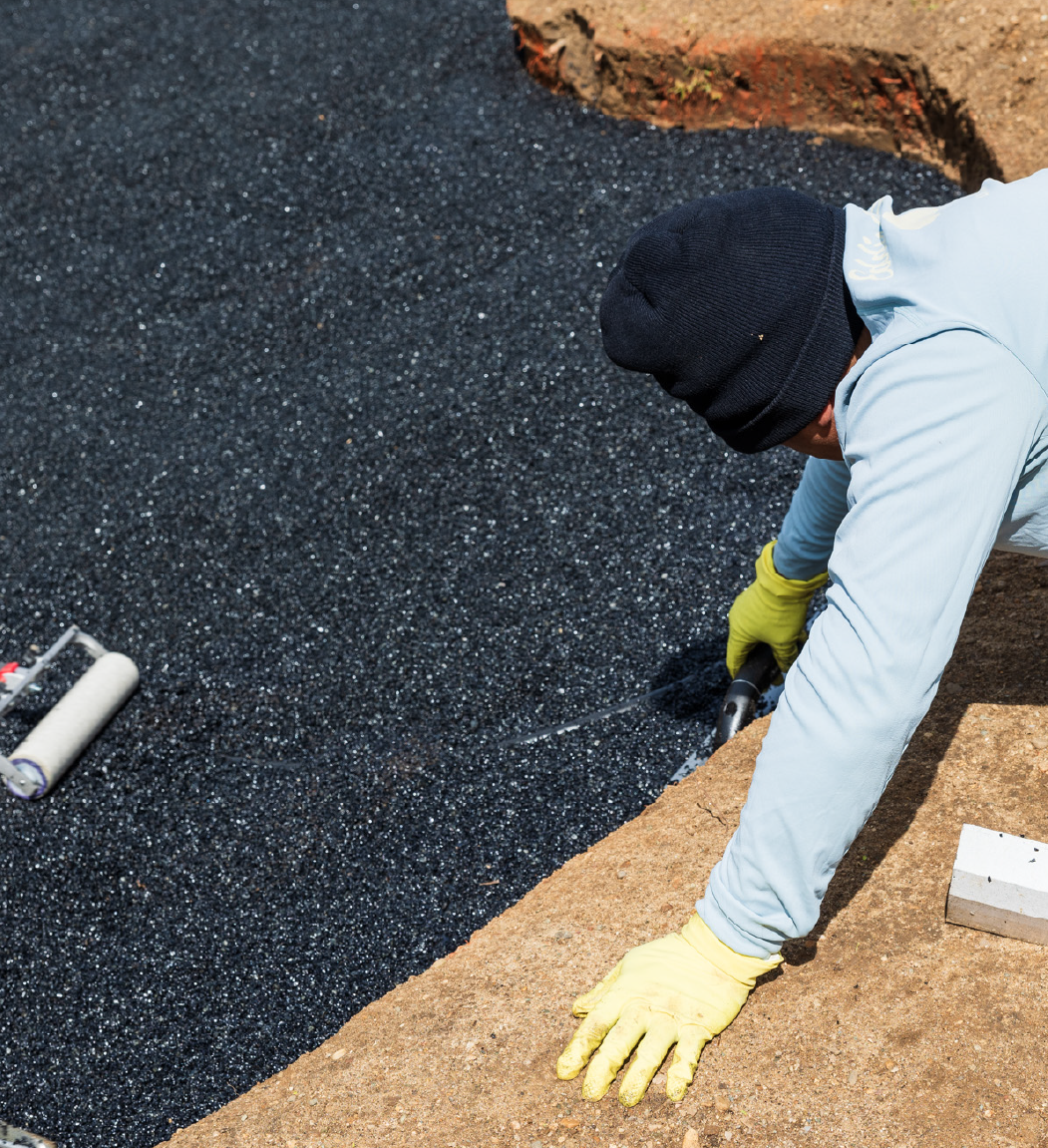
Porous pave being installed in a bunker
What preparation is required for the bunker floors prior to installing Sand Guard™?
The bunker floors should be prepped ahead of time in the following manner: The edge or sand line area of the bunker features should be delineated by the owner/golf architect; floors should be excavated, cored out, and drainage installed with substrate soils and drainage trenches compacted with a plate compactor.

During the day of the Sand Guard™ installation, a small, hand-dug anchor trench should be cut into the floor edge with a flat tipped shovel to assist with bonding the liner to the perimeter of the bunker sand line area during the curing process. We generally recommend a minimum of 3- to 4-inches of bunker sand along the edges and 5- to 7-inches plus of compacted bunker sand within the base of the floors.
How long does Sand Guard take to cure?
Sand Guard will generally take about 24 hours to fully cure. Since it is a moisture-cured formulation, careful attention to ambient air humidity, wind, and moisture levels during the installation is critical. Installations should NOT take place when rain is in the forecast. The material sets up quicker during high humidity than low humidity, so adding moisture with a garden-type pump sprayer and an irrigation syringe hose with a fine spray nozzle (see the Sand Guard Installation Tools Sheet) during lower humidity is especially important and recommended in most applications.
What is the temperature needed to install Sand Guard?
Sustained air and surface soil temperatures of 45° Fahrenheit and above are needed to install Sand Guard properly.
What does the training to install Sand Guard involve and how long does it take?
Sand Guard training involves on-site education of the installer’s crew members by one of our Sand Guard/Porous Pave staff members. You will be working alongside crew members in an actual installation and it typically lasts for 1 to 2 days. Training includes instructions on how to store and transport the material; set up the work area; coat equipment and mixer with vegetable oil; mixing rubber, rock, and binder together in a mason’s mixer (plaster or mortar mixer); empty the Sand Guard material from the mixer into a wheelbarrow; pour mix into place; rolling; finishing and misting with water to assist in curing.
What is the crew size needed to perform installation & how many square feet can they install in one hour?
A good crew size is 5 to 6 trained personnel. Once trained and “in the groove,” the crew can install 500 to 700 square feet per hour or 5,000 to 6,500 square feet per day. Increased daily production rates can be achieved with larger mixers or additional mixing crews.

Product Application Comparison

Trails/Paths
XL
XLR
XLS
XLP
Sand guard
Tree Surrounds
XL
XL
XLM
XLS
XLP
Sand guard
Patios
XL
XLR
XLS
XLP
Sand guard
Maintenance Strips
XL
XLM
XLR
XLS
XLP
Sand guard
Bridges
XL
XLR
XLS
XLP
Sand guard
Cart Paths
XL
XLR
XLS
XLP
Sport Courts
XL
XLR
Pool Surrounds
XLR
XLS
Fitness Stations
XL
XLR
XLS
Senior Living Facilities
XLR
XLS
XLM
Bunkers
Sand Guard
Flower beds
XLM
Parking Lot Islands
XLM
Building Drip Zones
XLM
Why Choose Porous Pave?

A Smarter Solution for Modern Course Management

Whether you're building a new course, renovating bunkers, or addressing problem areas, Porous Pave provides a proven solution that supports drainage, reduces maintenance, and protects the long-term condition of your course.

Engineered for Long-Term Durability
Superior Drainage Performance
Reduced Maintenance Costs

Our Customers

Our team has had the opportunity to work on projects nationwide. Checkout our portfolio to see what the team has been working on recently.
Craguns Logo
Winged Foot Logo
Hamilton Farm logo
belle meade country club logo
Shadow creek logo
Snoqualmie Logo
Treetops Resort Logo
Golf course logo
Valencia Golf Course Logo
Craguns Logo
Winged Foot Logo
Hamilton Farm logo
belle meade country club logo
Shadow creek logo
Snoqualmie Logo
Treetops Resort Logo
Golf course logo
Valencia Golf Course Logo
Princeton University
Texas University Logo
Iowa state logo
Duke University Logo
University of Notre Dame
Michigan State University
Purdue University Logo
Stanford University Logo
Temple University Logo
University of Arizona Logo
Princeton University
Texas University Logo
Iowa state logo
Duke University Logo
University of Notre Dame
Michigan State University
Purdue University Logo
Stanford University Logo
Temple University Logo
University of Arizona Logo
Vikings Logo
Phillies Logo
Arlington Cemetery Logo
Orlando Florida logo
seattle logo
Grand rapids logo
North East Logo
Syracuse Logo
Vikings Logo
Phillies Logo
Arlington Cemetery Logo
Orlando Florida logo
seattle logo
Grand rapids logo
North East Logo
Syracuse Logo

Check out our recent projects:

Talk With Us About Your Golf Course Project

Contact us to discuss your course and explore where Porous Pave can improve performance and reduce maintenance.